Budgets, leases, and a person in the loop.
A run is a batch of agent tasks with one spending limit, one cap on how many run at once, and one switch to pause them all. It's a Kubernetes resource, so you can read it, diff it in git, and hand it to an auditor.
What has to be true before a task runs.
The scheduler admits a task only when the tasks it depends on have merged, the packages it wants are free, there's budget left, and the run is under its concurrency cap. Each admission reserves an estimate against the budget until the agent reports what it actually spent. So a run stops taking on new work before it overruns, rather than after.
| repo | fixes | blast radius | gate |
|---|---|---|---|
| rules_cc_cross | C3 · C6 | blast:rules_cc_cross://src | green BuildRun |
| plugin-depot | C6 | blast:plugin-depot://ui | green BuildRun |
| rules_lean | C3 | blast:rules_lean:* | serializes repo |
| …73 more | |||
maxTokens 2.1M / 3.0M concurrency4 leasesHeld4 The launch plan, then the run it creates. Values illustrative.
Two agents want the same package. One waits.
Each task declares the Bazel packages it'll touch. Before admitting it, the scheduler takes a lease on every one of them. Leases are all-or-nothing, they expire if the agent dies, and they're released when the change merges. Values illustrative.
- //src/toolchain
- //src/rules
- //tests/toolchain
- //src/rules
- //src/cache
conflict: lease blast:tbzl://src heldA toolchain, MODULE.bazel, or .bazelrc change can reach anything in the repo, so it takes blast:tbzl:* and serializes the whole repo rather than pretending to a narrow radius. Leases carry a TTL — a scheduler or agent that dies releases its region instead of wedging the fleet.
An agent can only do what you can do.
- Your identity goes with every tool call. The code host records a person, not a bot account.
- Each capability's own tool server decides what's allowed. The agent host only aggregates them.
- A write is shown as a preview first. It only happens on a later turn, after you approve it. An agent can't ask and act in the same breath.
When an agent needs to ask, it waits.
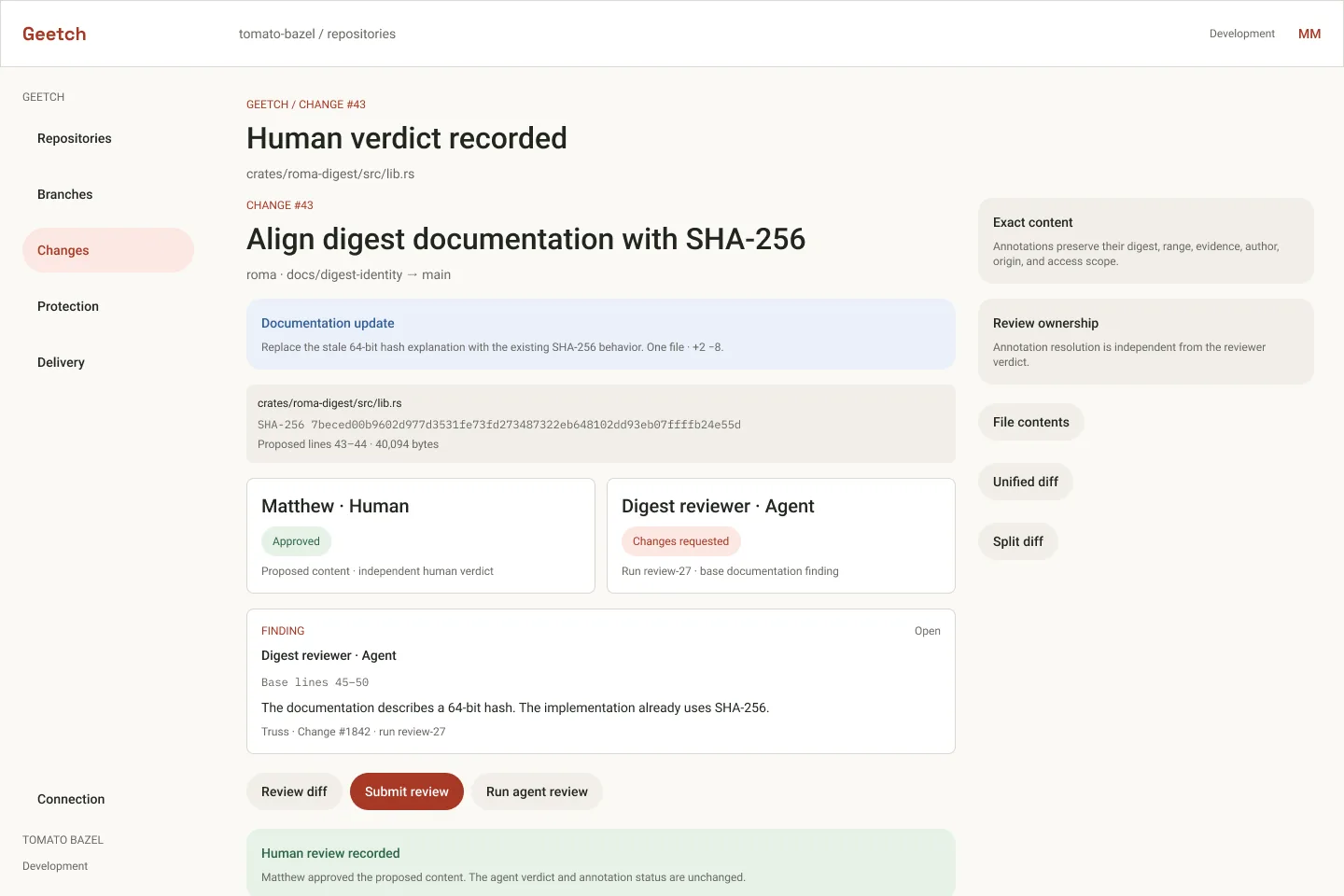
If an agent needs a person, it raises a prompt, checkpoints its work and its session, and suspends. The prompt outlives the process. When someone answers, the agent picks up from the checkpoint. The same checkpoints run every five minutes and on shutdown, so a crash costs you a few minutes of work, not the whole run. Your verdict and the agent's verdict are recorded separately, and neither overwrites the other.