
How agents stay out of each other's way.
Agents can message each other, and they do. But messages aren't what keeps two agents from editing the same file at the same time.
Claim what you'll touch. Say what you're doing.
Each agent holds a lease on the packages it's about to change and publishes a short note on what it's working on. Any agent can ask who else is working nearby. Seventeen coordination tools sit behind one endpoint, covering claims, messages, channels, handoffs, escalation, checkpoints and resume. A handoff is an offer that the other agent has to accept.
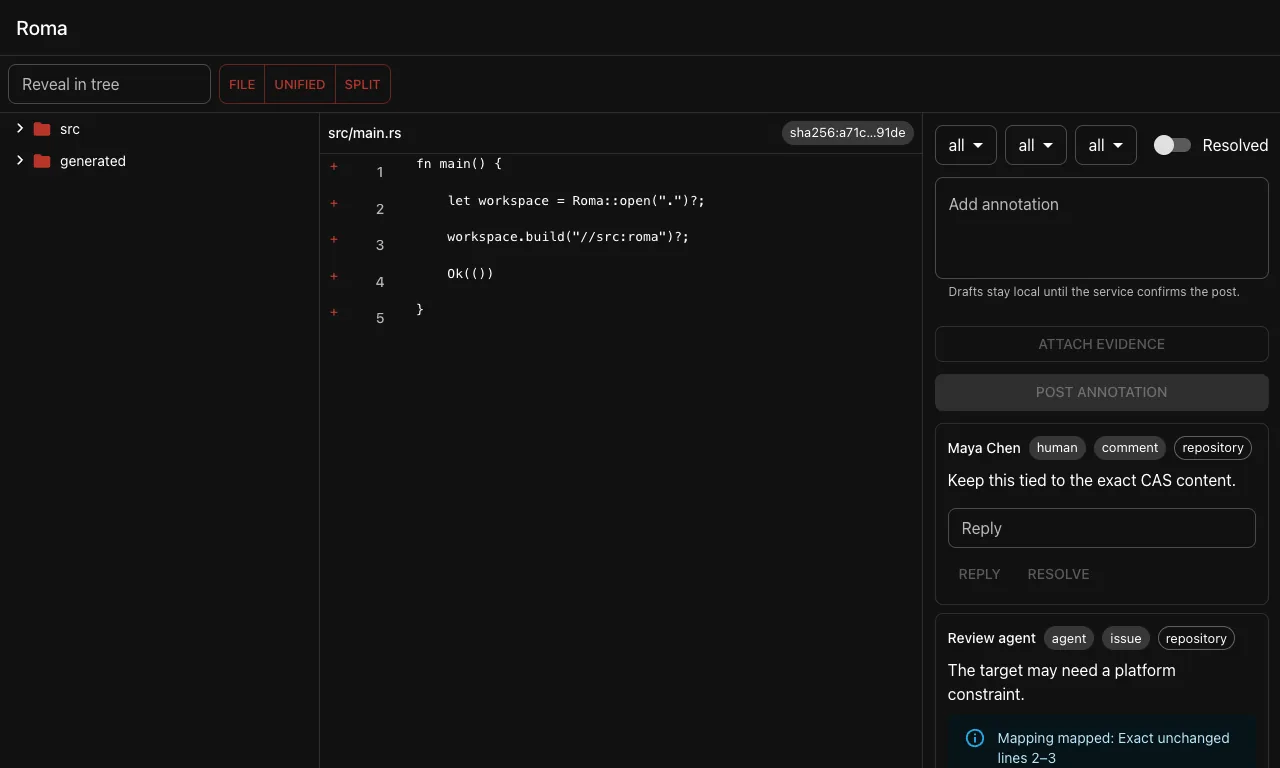
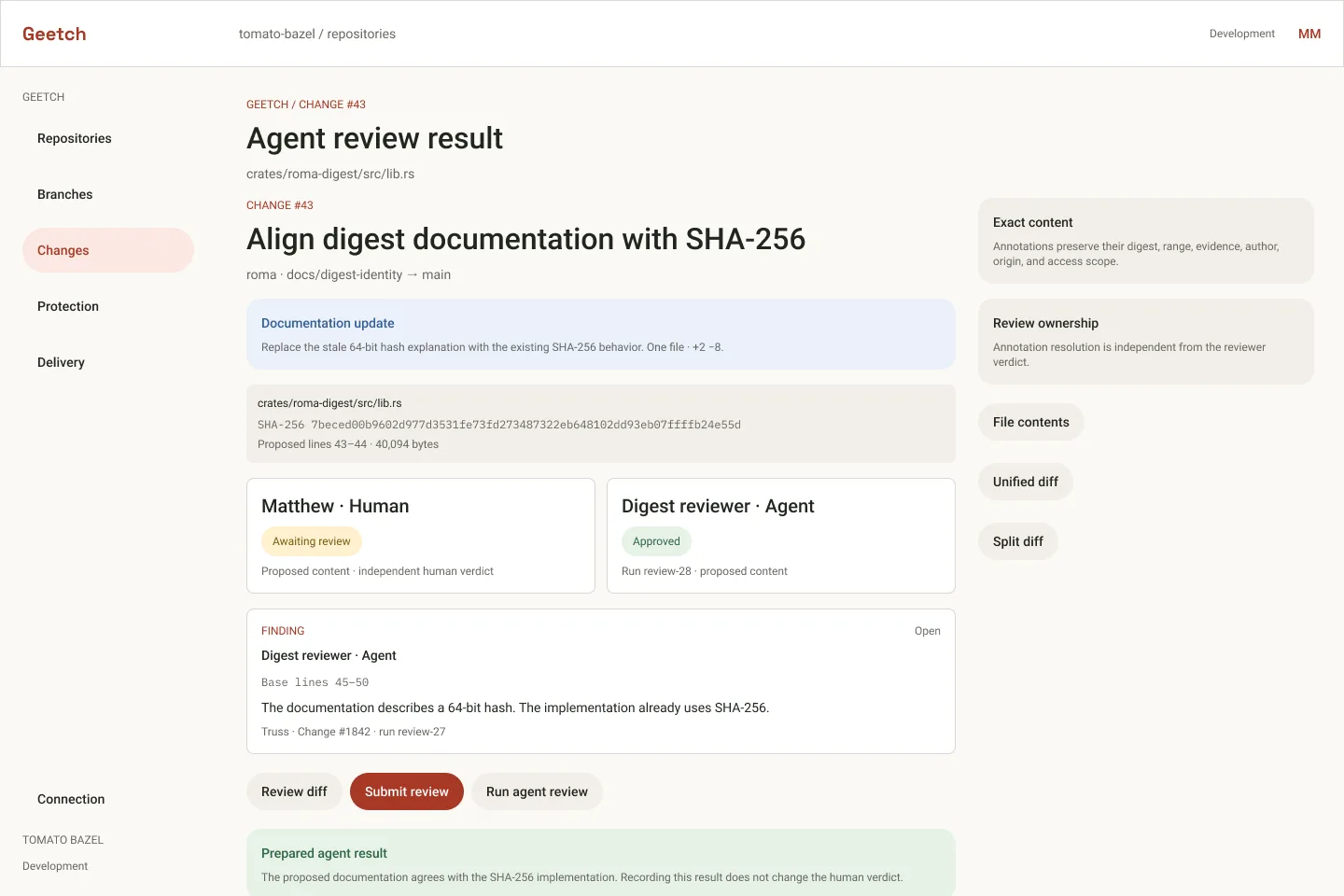
Notes also attach to the work itself. A finding, a comment or a provenance note is pinned to a specific version of a file, with its author, whether that's a person or an agent, and the evidence behind it. Every spawn, claim, handoff and merge is written to a durable audit stream you can replay later.
A person's attention is the scarce resource.
Underneath this sits a formal model where a reviewer's time is a budget and agents bid for it with bids that carry a proof of what they can do. The allocation is proven to be truthful and to stay within budget. What runs in the fleet today is the claim-and-note core. The auction layer, and a geometric model of focus in which overlap between agents is computed rather than declared, are what we're building next.